Webinar: From Project to Platform: New Resources on PSDI – Session 1

Webinar: From Project to Platform: New Resources on PSDI – Session 1

Registration link: https://us06web.zoom.us/webinar/register/WN_kaav0loGQp24L4VDOEPuuA

PSDI is pleased to launch a new webinar series entitled “From Project to Platform: New Resources on PSDI”. This series aims to showcase the high-quality tools and resources developed through the funding call 2025, introduce them to a broader community, and foster engagement with relevant user groups.  

Presentation 1

“Universal” Hyper-Active Learning for Machine Learning Interatomic Potentials
Challenge
    • Building accurate machine‑learning models of atomic interactions requires carefully curated training datasets, yet generating these datasets is often the hardest and most time‑consuming step.
Approach
    • We introduce ase‑uhal, a Python tool developed through a PSDI Pilot Project (Oct 2025–Mar 2026).
    • It automates and accelerates dataset generation, steering atomistic simulations toward the most informative configurations and avoiding redundant calculations.
    • The tool is available via pip install ase-uhal and integrates seamlessly with the ASE ecosystem.
Innovation
    • A “universal” extension of the Hyperactive Learning (HAL) framework makes the method compatible with modern foundation models that can be fine‑tuned.
    • A new batched workflow significantly increases throughput compared to existing methods.
    • Demonstrated on an InGaP alloy system, where models trained on diverse data outperform those trained on random sampling.

James Kermode is a Professor in the School of Engineering at the University of Warwick (UoW), where he directs the EPSRC Centre for Doctoral Training in Modelling of Heterogeneous Systems (HetSys CDT) and the Warwick Centre for Predictive Modelling (WCPM), both of which have strong synergies with PSDI activities across the full spectrum from theory and algorithm development through research software engineering to applications.

Presentation 2

MOFevaluator: A Cloud-Based Platform for Process-Informed Discovery of Metal–Organic Frameworks for Carbon Capture and Beyond
Challenge
    • Metal‑Organic Frameworks (MOFs) are promising for carbon capture and gas‑separation applications, but moving from research to industrial‑scale decarbonization requires demonstrating economically viable production and deployment routes.
    • Identifying optimal MOFs requires understanding the full energy‑system context, including CO₂ sources, sinks, costs, and process constraints.
Approach
    • The MOFevaluator project builds on the PrISMa platform, which evaluates MOF performance based on:
      • specific CO₂ sources (power plants, industry, direct air capture)
      • possible CO₂ sinks (geological storage, mineralisation, conversion, etc.)
      • regional constraints
    • This includes process modelling, techno‑economic analysis, and life‑cycle assessment, ensuring that system‑scale requirements guide material discovery.
Innovation
    • MOFevaluator transforms the workflow from a local simulation tool into a cloud‑based platform with a fully searchable MOF materials database.
    • Researchers can:
      • visualise data through an interactive web interface
      • integrate the database via API
      • use a streamlined environment to explore new opportunities for MOF discovery and application
    • The platform enables faster, more scalable, and system‑informed materials discovery.

Peter McCallum is a Research Software Engineer at Heriot-Watt University, specialising in the architectures and development of web-based research systems. Having spent a decade in industry working on low-carbon energy system as a mechanical engineer, he has since led software development activities in academic settings, across themes including fluid dynamics, control engineering, energy networks, built-environment modelling, and for the new MOFevaluator web-platform. His main ambition is to build tools that not only support research but also translate quickly to applied industrial settings, through distributed computing, web-based visuals, and API connected data via the cloud.
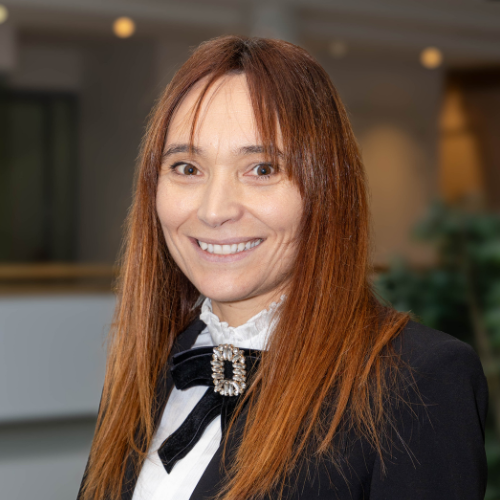
Susana Garcia Trained as a Chemical Engineer, Susana Garcia is a Full Professor in Chemical and Process Engineering and the Associate Director on CCUS at the Research Center for Carbon Solutions (RCCS) in Heriot-Watt University (Edinburgh). An internationally recognised expert on low carbon separation processes, CCUS and DAC technologies, leading AI-driven materials discovery for industrial decarbonisation projects.

Register for this webinar

Register for this webinar directly through zoom:
https://us06web.zoom.us/webinar/register/WN_kaav0loGQp24L4VDOEPuuA


 The PSDI team looks forward to seeing you at the webinar, if you have any questions you can always get in contact with us.

Loading...