
The PSDI team joined researchers, laboratory leaders, technology providers and start-ups at London Lab Live 2026, held at ExCeL London on 6–7 May. The organisers report that the event is attended by around 3,000 laboratory professionals from sectors including pharma, biotech, chemicals, food and beverage, materials, academia, energy and the environment. The programme focused on automation, connectivity, digital transformation, sustainability, AI, data and laboratory operations.
“It is always easier to digest cutting-edge digital science while nibbling on some very tasty chips” – Dr Matthew Partirdge
Across the exhibition floor, the show reflected a laboratory sector that is no longer asking whether digital tools matter, but how they can be made useful, connected and sustainable. Alongside established vendors and equipment suppliers, the talks programme featured sessions on ELNs, LIMS, robotics, AI-enabled workflows, facilities, standards, analytics and research strategy. A particular strength of London Lab Live is the way it mixes a conference-style programme with the range of the exhibition. It makes it easy to go from talks and discussions about data management and interoperability to seeing the tools, systems and suppliers behind those conversations.
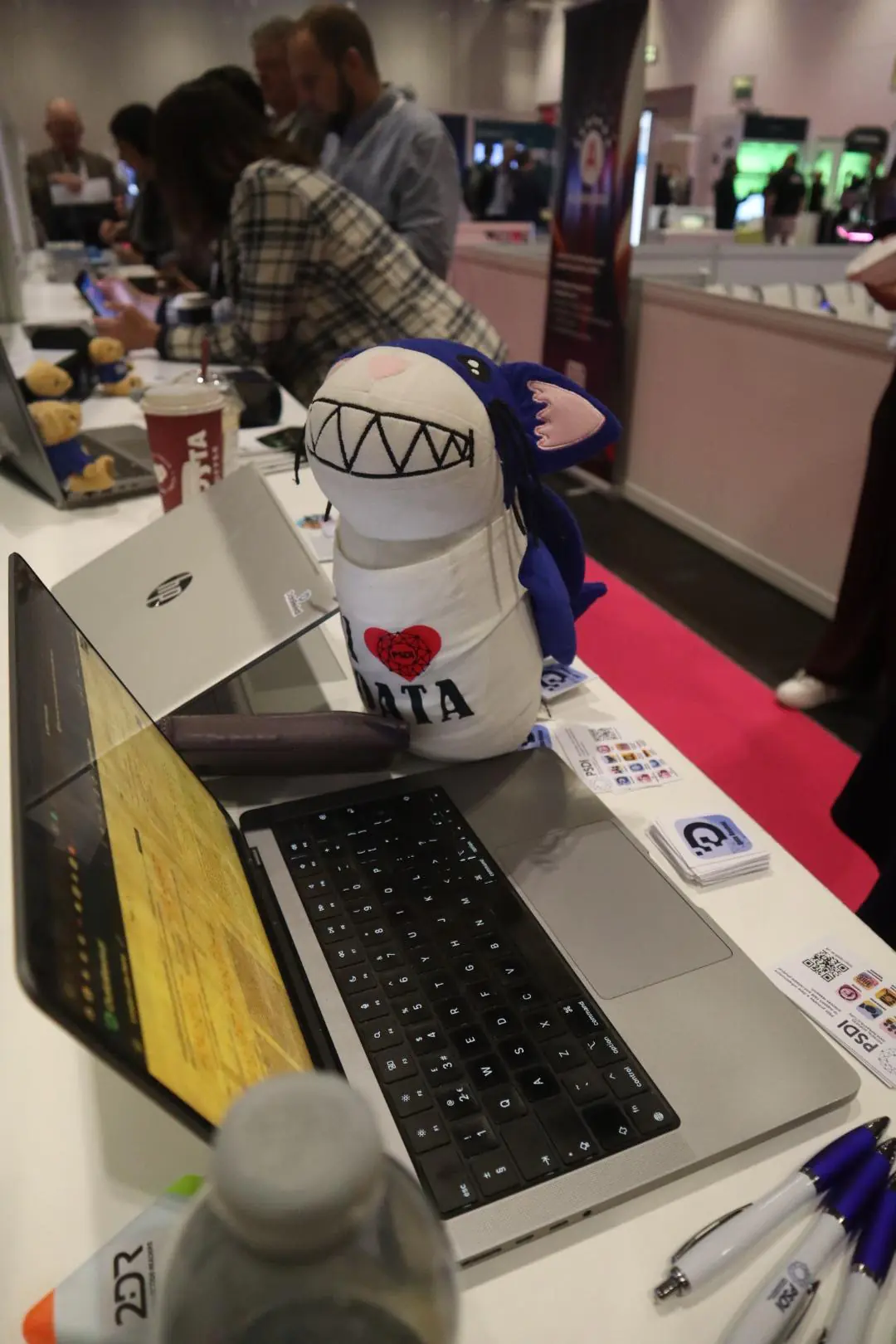
Sharkcat visiting the Data Revival stand in the start up zone, discussing how they might digitise their old lab notebooks
The Startup Zone was one of the busiest and most interesting parts of London Lab Live, putting early-stage companies in front of the same audience as larger, more established suppliers. Data Revival, a PSDI collaborator and service provider, had a stand in the zone and saw a strong response across the event. Visitors were not just stopping for a quick look. Many came with detailed technical questions about what can realistically be pulled from handwritten lab books, how chemical structures and experimental context are recognised, and how recovered data can be checked, searched and linked into existing lab systems.
That focus on recovering hidden or underused data fitted neatly with the wider tone of the event. For all the new instruments, platforms and software on show, many of the conversations came back to the same practical problem: laboratories are producing more digital data than ever, but much of it is still hard to search, hard to move between systems and hard to reuse once the original project has ended. There is also a dizzying array of tools and services claiming to help solve those problems. Whether the conversation was about ELNs, LIMS, automation platforms, AI tools or data extraction services, the underlying question was often the same: how do laboratories make better use of the knowledge they already generate?
PSDI contributors were involved in several parts of the conference programme. Dr Samantha Pearman-Kanza contributed across both days, including round tables on ELN Implementation and After Implementation comes Interoperability: How to link your ELN to other systems. She also chaired sessions in the Digital Transformation and Data Management, Standards & Analytics streams, and presented The ELN Quest: What We Discovered on the Road to Implementation, drawing on lessons from electronic lab notebook work we’ve done at the University of Southampton.
Dr Pearman-Kanza also moderated the panel FAIR in Action: From Principles to Practice, which brought together Puja Myles of the Medicines and Healthcare products Regulatory Agency, Ben Gardner of AstraZeneca and Peter McQuilton of GSK. The panel explored what it takes to move FAIR data from a set of widely supported principles into routine practice, including the systems, standards, incentives and organisational habits needed to make research data genuinely findable, accessible, interoperable and reusable.
Dr Philip Leadbitter also contributed to the programme by chairing a Digital Transformation session. The session formed part of a broader track looking at how laboratories are adopting new digital approaches, from AI and data platforms to operational change and infrastructure planning.
Dr Matthew Partridge joined the panel Designing for the next decade: Ensuring research strategies and digital investments stand the test of time. The session was chaired by Burkhard Schaefer, Director and Head of Partnering at the SiLA Consortium, and included Simon Hettrick, Director of Strategy at the Software Sustainability Institute, and Brian John Roulstone of DGL International. The panel considered how organisations can design research strategies and digital investments that remain useful beyond their initial launch, with discussion covering sustainability, knowledge retention, discoverability and the importance of change management.
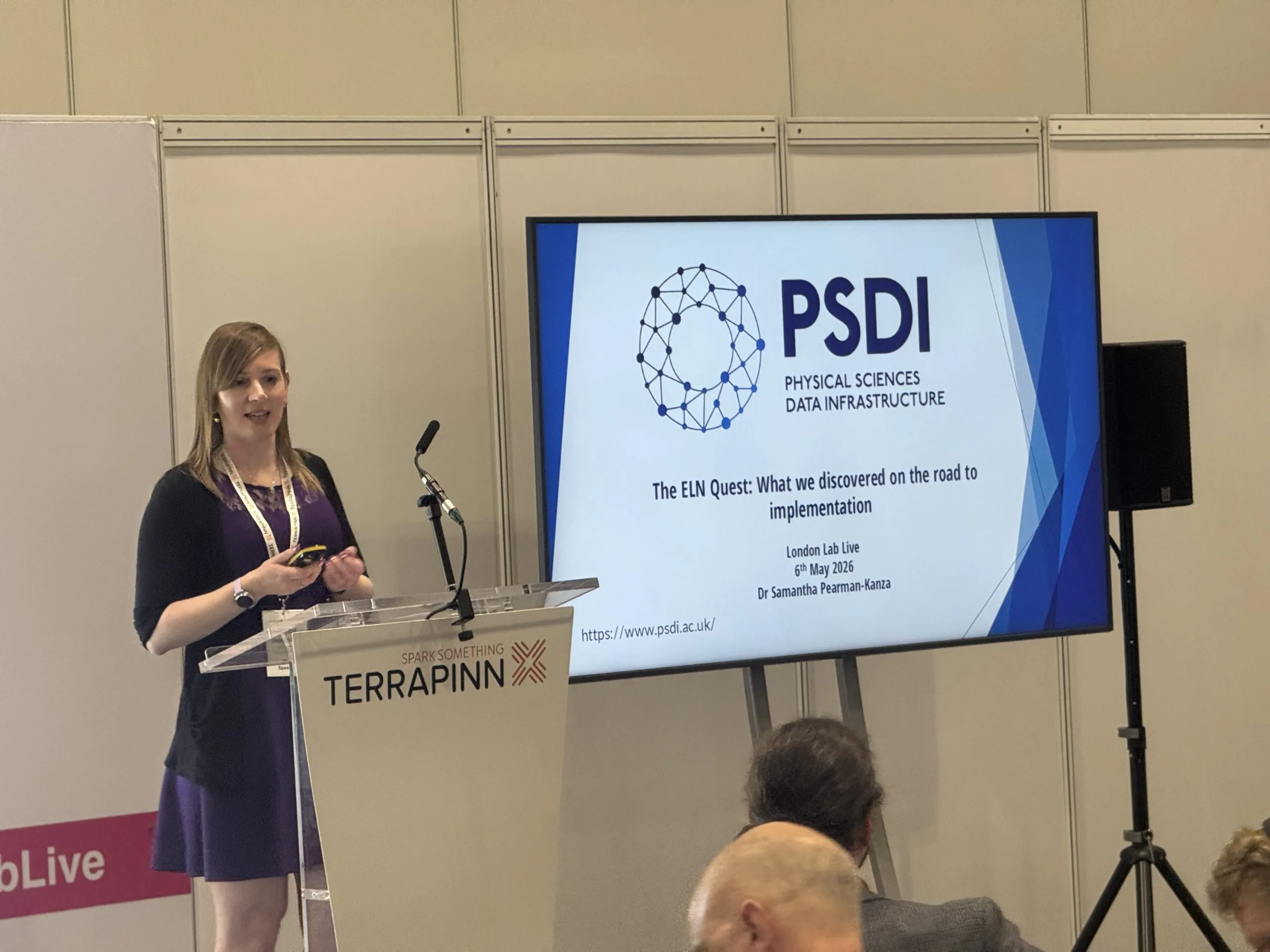
Dr Samantha Pearman-Kanza talking about the how you successfully implement an ELN
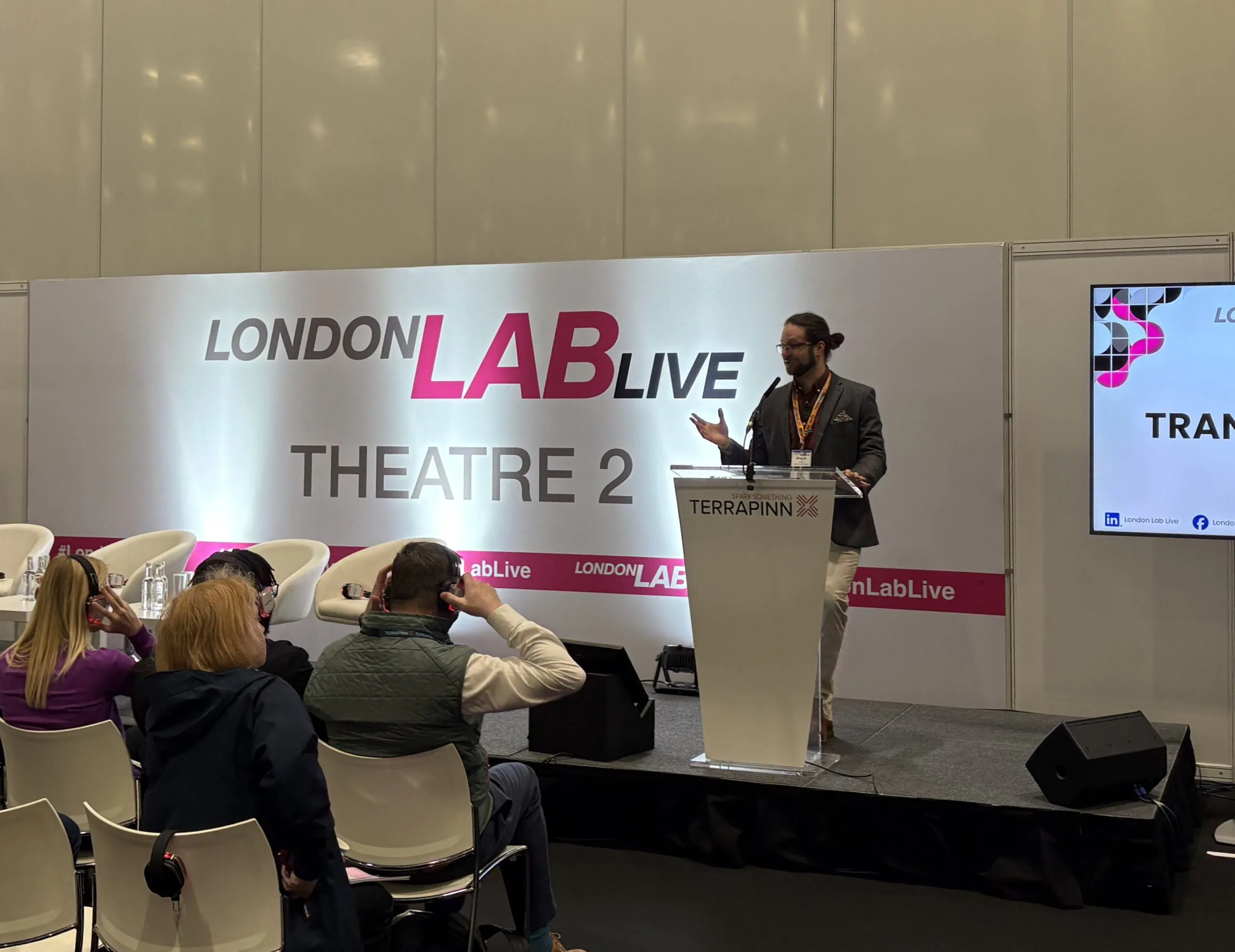
Dr Philip Leadbitter chairing a session on Digital Transformation
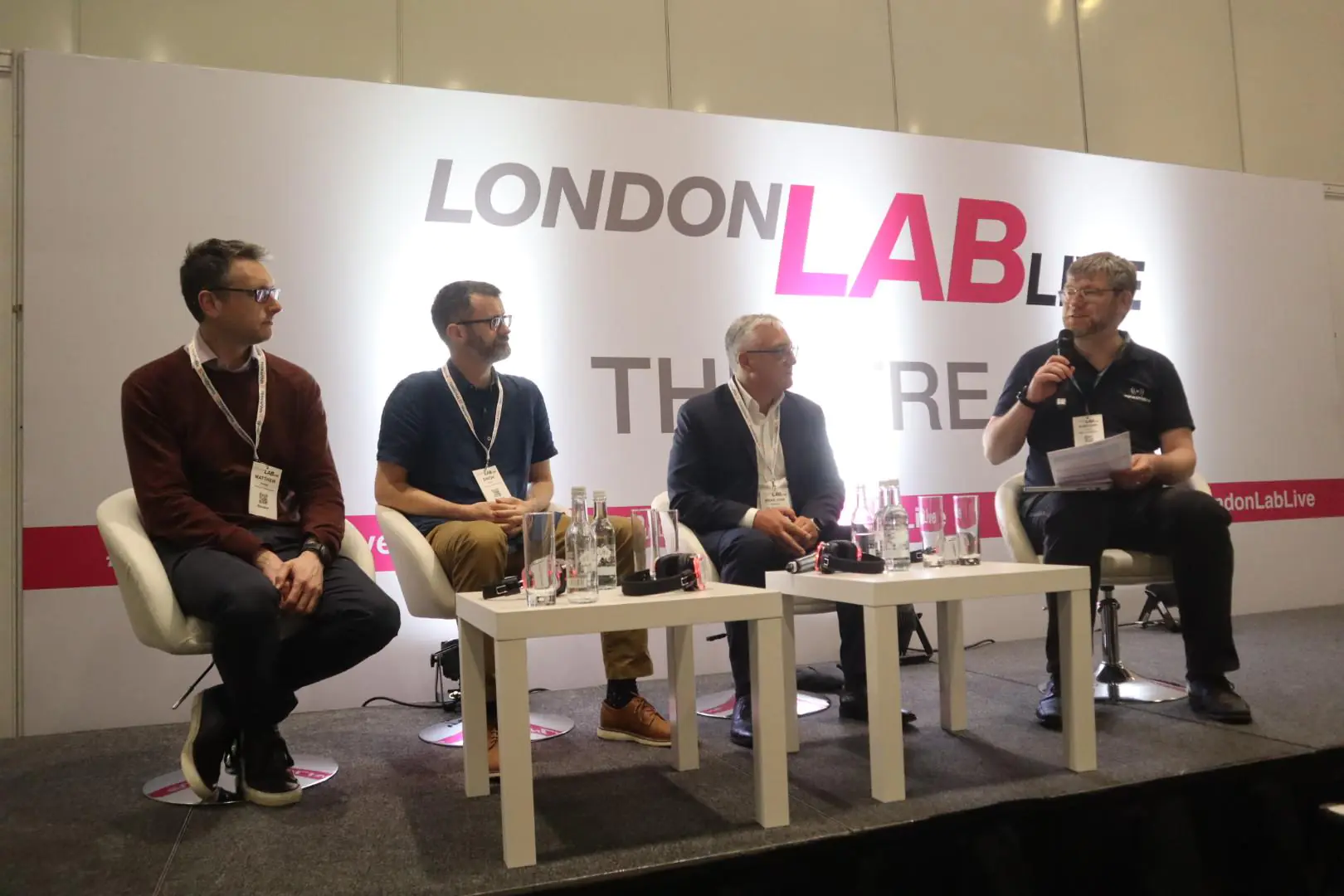
Dr Matthew Partridge on a panel (left) discussing how we make research strategy and digital investment stand the test of time
For PSDI, London Lab Live 2026 was a useful place to catch up with existing collaborators and meet new ones, especially in the digital laboratory and research data space. The mix of exhibitors, start-ups, suppliers, researchers and technical teams also made it a good way to see who is working in areas such as ELNs, interoperability, automation, data capture and AI-supported everything. It was all made much easier by an impressively well-run team of organisers, who seemed to have thought of everything from laptop charging tables to a food truck parked right next to the posters. It is always easier to digest cutting-edge digital science while nibbling on some very tasty chips.